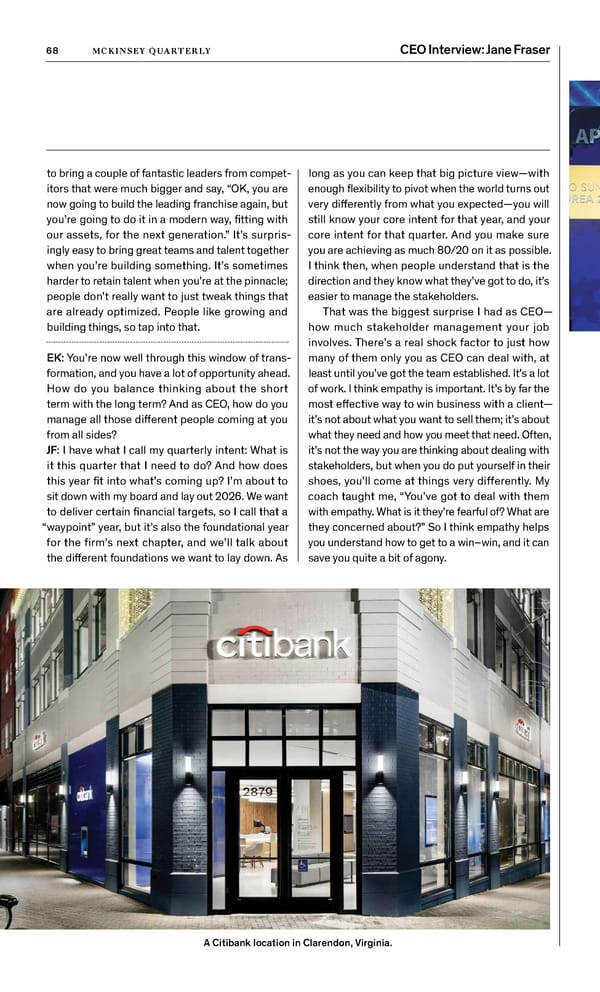
68 M C K I N S EY Q UA RT E R LY - - - to bring a couple of fantastic leaders from compet itors that were much bigger and say, “OK, you are now going to build the leading franchise again, but you’re going to do it in a modern way, fitting with our assets, for the next generation.” It’s surpris ingly easy to bring great teams and talent together when you’re building something. It’s sometimes harder to retain talent when you’re at the pinnacle; people don’t really want to just tweak things that are already optimized. People like growing and building things, so tap into that. EK : You’re now well through this window of trans formation, and you have a lot of opportunity ahead. How do you balance thinking about the short term with the long term? And as CEO, how do you manage all those different people coming at you from all sides? JF : I have what I call my quarterly intent: What is it this quarter that I need to do? And how does this year fit into what’s coming up? I’m about to sit down with my board and lay out 2026. We want to deliver certain financial targets, so I call that a “waypoint” year, but it’s also the foundational year for the firm’s next chapter, and we’ll talk about the different foundations we want to lay down. As long as you can keep that big picture view—with enough flexibility to pivot when the world turns out very differently from what you expected—you will still know your core intent for that year, and your core intent for that quarter. And you make sure you are achieving as much 80/20 on it as possible. I think then, when people understand that is the direction and they know what they’ve got to do, it’s easier to manage the stakeholders. That was the biggest surprise I had as CEO— how much stakeholder management your job involves. There’s a real shock factor to just how many of them only you as CEO can deal with, at least until you’ve got the team established. It’s a lot of work. I think empathy is important. It’s by far the most effective way to win business with a client— it’s not about what you want to sell them; it’s about what they need and how you meet that need. Often, it’s not the way you are thinking about dealing with stakeholders, but when you do put yourself in their shoes, you’ll come at things very differently. My coach taught me, “You’ve got to deal with them with empathy. What is it they’re fearful of? What are they concerned about?” So I think empathy helps you understand how to get to a win–win, and it can save you quite a bit of agony. CEO Interview: Jane Fraser A Citibank location in Clarendon, Virginia.
 McKinsey Quarterly: A Time for Courage Page 69 Page 71